Supply Chain
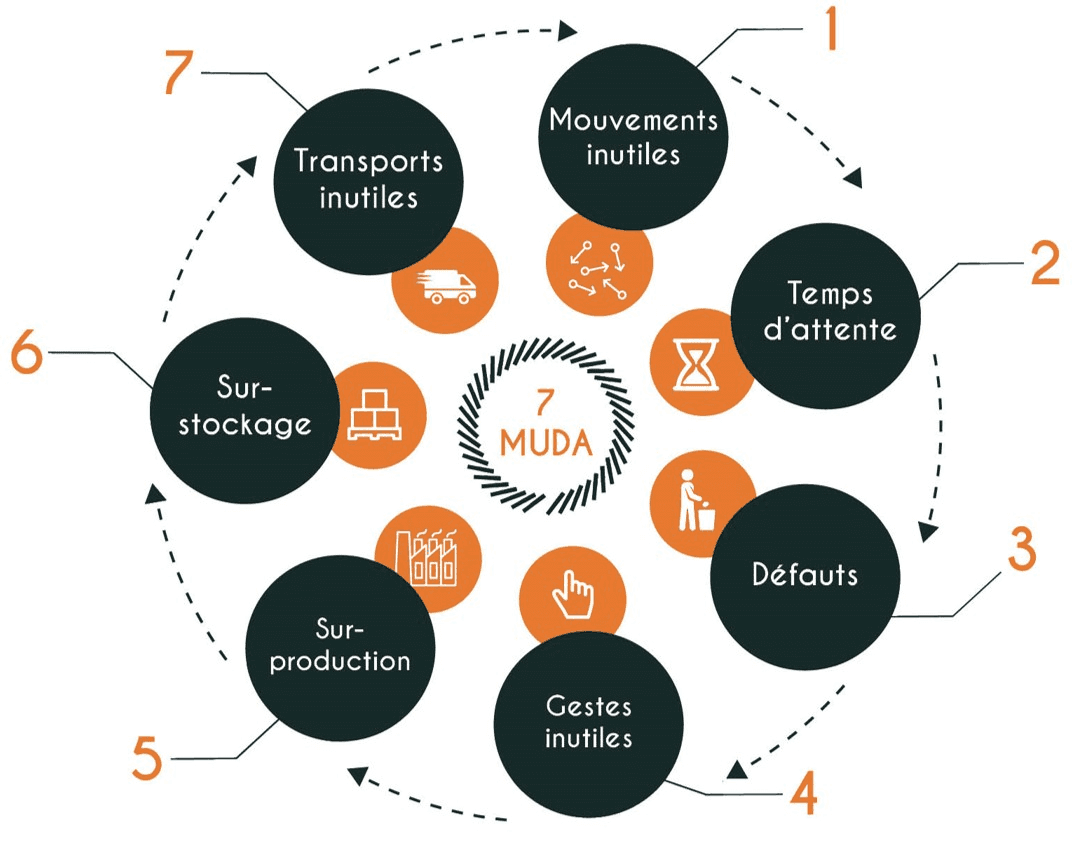
The Mudas: basic tools of Lean
Oplit: an innovative approach to reducing waste
Oplit's advantages for industries with numerous Mudas
In the complex world of industrial production, the constant pursuit of operational efficiency is essential to maintaining competitiveness in the global market. To achieve this goal, many companies turn to the principles of Lean Manufacturing, in which the 7 Mudas play an essential role. These 7 Mudas, or wastes, represent the most common obstacles to efficiency in production processes. With this in mind, Oplit, an innovative company in the field of industrial-process optimization, integrates these principles to revolutionize the scheduling and planning of operations.
In the context of production management, Lean Manufacturing is an approach focused on eliminating waste to maximize value for the customer while minimizing costs and lead times. At the heart of this philosophy are the 7 Mudas, also known as the "Seven Wastes," which represent the most common sources of efficiency loss in industrial processes.
Overproduction: Overproduction occurs when the company produces more than the customer demands or earlier than necessary. This often leads to surplus stock, unnecessary labor costs, and overloaded production capacities. Adjusting production according to real customer demand is essential to avoid this waste. To do so, it is recommended to use tools such as workload-versus-capacity charts to plan and adjust production accordingly.
Waiting: The waiting times between process steps are often a major waste. This occurs when information, material, or resources are not ready when they are needed. These waits lead to delays and inefficient use of resources. To reduce this waste, it is essential to eliminate flow disruptions and balance tasks to avoid unnecessary waiting times.
Unnecessary transport: Movements of materials or products that do not add value to the final product are considered waste. This can include excessive movement of raw materials, semi-finished products, or finished products. To reduce this waste, it is recommended to bring workstations closer together and shorten transport routes to minimize unnecessary movements.
Over-processing: Over-processing occurs when efforts are devoted to activities that do not create value for the customer. This can include repetitive manual operations or complex processes that are not necessary. To reduce this waste, it is important to eliminate or reduce non-essential activities and optimize working times to maximize added value.
Excessive stock: Too much stock, whether in the form of raw materials, semi-finished products, or finished products, can lead to high storage costs, product obsolescence, and poor inventory management. To avoid this waste, it is essential to eliminate excess stock and optimize stock levels to meet real customer demand.
Unnecessary motion: Unnecessary movements of workers or machines can also lead to significant waste. This can include repetitive gestures or non-essential movements that do not add value to the final product. To reduce this waste, it is important to save gestures at the workstations and minimize unnecessary movements to maximize the efficiency of operations.
Defects: Finally, defects or production errors can lead to additional costs, delays, and customer dissatisfaction. Rather than simply correcting errors after the fact, it is essential to eliminate the underlying causes of defects to prevent their occurrence.
In short, the 7 Mudas of Lean Manufacturing represent the most common obstacles to efficiency in industrial processes. By identifying and eliminating these wastes, companies can maximize customer value, reduce costs, and improve their competitiveness in the global market.
Oplit is a solution that enables better planning of industrial production as well as optimization of scheduling. It is an ideal solution for reducing waste and thereby cutting the associated costs and optimizing production processes.
Regarding overproduction, Oplit offers a planning module that makes it possible to visualize, in the form of a chart, the workload relative to the plant's capacity and thus make production-planning hypotheses to achieve the best possible load/capacity balance. This solution also highlights the bottleneck workstations of the plants, which gives you visibility into what is happening at these bottleneck workstations. As a result, you can anticipate production in order to anticipate your resource needs and avoid any overproduction.
The Oplit solution makes it possible to plan and coordinate resources so that the production load is well distributed among the different work centers. Consequently, this reduces unnecessary delays, waiting times at the foot of the work centers, and interruptions in the production processes.
In addition, excessive stock, which is a considerable obstacle to optimizing production processes, can be managed thanks to the solution Oplit offers. Indeed, this solution makes it possible to have visibility into the work-in-progress of production, and it also has a feature aimed at managing your company's stock.
Oplit lets you assign operators to workstations, and thus you can manage operator flows and reduce unnecessary motion between workstations.
Finally, the solution provided by Oplit can help companies detect defects throughout the production process. It makes it possible to have real-time tracking and to set up alerts to identify potential problems and take immediate corrective action.
In conclusion, integrating the principles of Lean Manufacturing, notably the 7 Mudas, into the scheduling and production-planning solutions offered by Oplit paves the way for increased operational efficiency for industrial companies. By balancing load and capacity, reducing waiting times, and optimizing production processes, Oplit contributes to reducing waste and improving profitability. Thanks to the management of stock and work-in-progress and to good production planning, companies can also benefit from better product quality and a reduction in the costs associated with rework. By adopting this approach focused on efficiency and process optimization, Oplit helps its customers stay competitive in a constantly evolving industrial environment.